



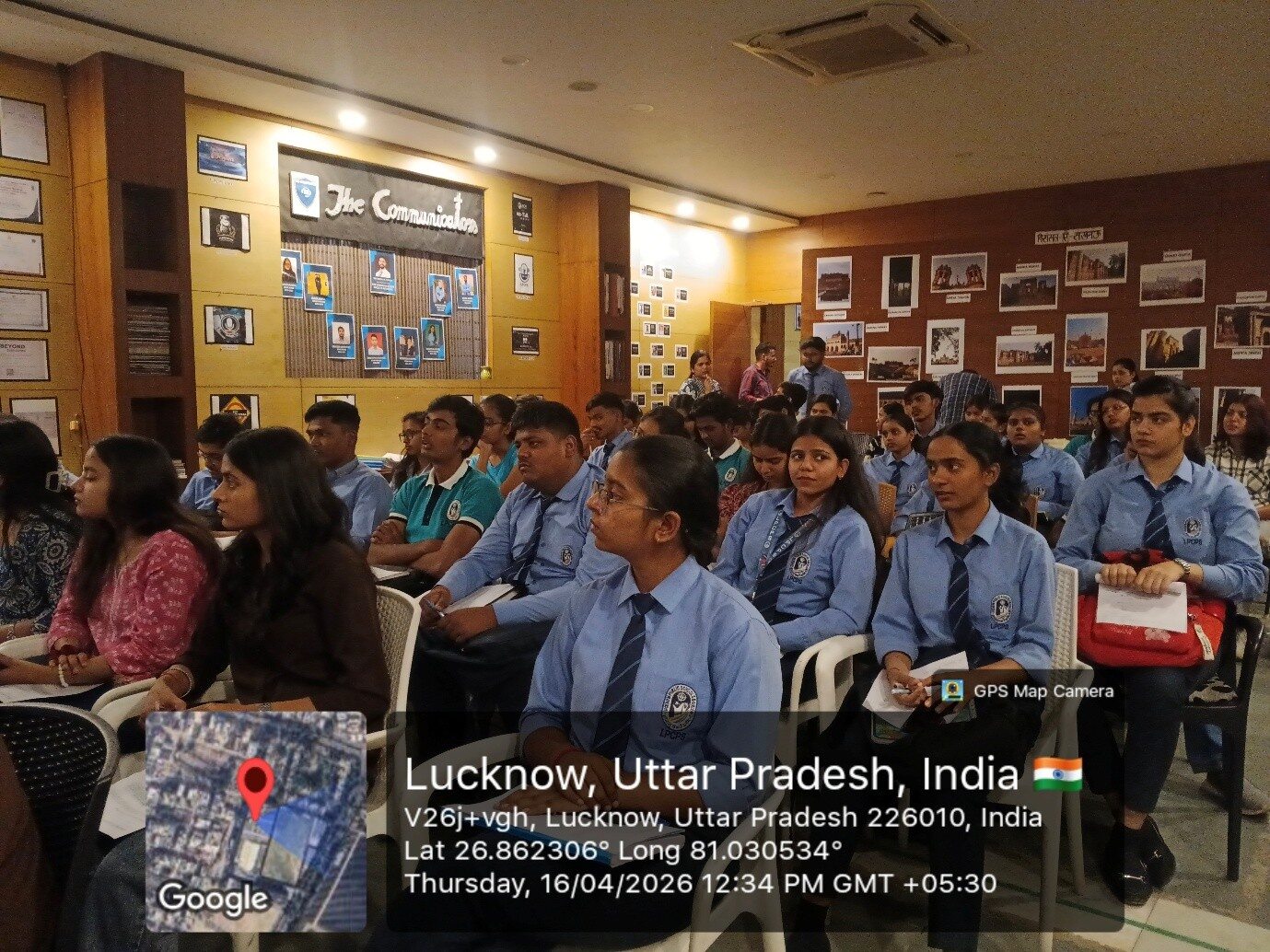
LPCPS recently conducted a mental health awareness session as part of its ongoing extension activities to address the rising tide of stress among the student body. Led by counseling psychologist Ms. Jyoti Singh, the session utilized the "Learning to Unwind" concept note to highlight the "quarter-life crisis" facing emerging adults. The session aimed to move beyond the stigma of mental health, providing students and faculty with data-driven insights and practical strategies for building resilience during pivotal transition years.
- The Crisis of the "Transition Years "The session emphasized that the age group of 18–29 is a critical period for identity formation and resilience building. However, it is also a period of intense vulnerability:
- Mental Health Statistics: 18–29-year-olds report the highest rate of acute mental health crises at 15.1%.
- Campus Prevalence: Approximately one-third of college students screen positive for significant anxiety or depression.
- The Quarter-Life Crisis: Many students experience profound uncertainty regarding self-worth and career paths as they move from education to the workforce.
- Identifying "Hidden" Stress Ms. Singh highlighted that stress often hides behind a façade of high productivity and perfectionism. Participants were encouraged to look for subtle warning signs:
- The "Invisible" Student: At-risk students often appear busy and strong while silently struggling.
- Physical and Behavioral Red Flags: These include chronic headaches, fatigue, withdrawal from group discussions, and operating on "automatic pilot".
- Procrastination: Research shows a strong correlation between stress and academic procrastination. Rather than laziness, this is an emotional escape mechanism that leads to a cycle of guilt and sleep disruption.
- Stress as Friend and Foe: A central theme of the session was distinguishing between different types of pressure:
- Eustress: Healthy stress that can be harnessed for growth and focus when students find a meaningful purpose.
- Harmful Stress: Chronic, unchecked stress is dangerous and significantly predicts self-harm behavior. The goal for faculty is to intervene before stress escalates to suicidal thoughts or self-injury.
- Data-Driven Solutions and Protective Factors The session provided empirical evidence for simple yet effective interventions:
- The Power of Sleep: Getting 6+ hours of sleep is the single strongest predictor of a student's ability to regulate emotions and consolidate memory.
- Social Support: Reliable peer and mentor networks act as a buffer against burnout and are a major factor in preventing student dropout.
- The Role of Faculty: Educators were encouraged to foster a "culture of care" by reminding students that their self-worth is not defined by their "busy-ness" or level of stress.
The "Learning to Unwind" session concluded with the reminder that the transition to adulthood is a "marathon, not a sprint". By equipping the Apni Sunao Community with the language to discuss mental health and the awareness to spot early warning signs, LPCPS aims to build a proactive support system. Success lies in moving from merely reacting to crises to building supportive, healthy routines that protect student well-being.
एलपीसीपीएस ने हाल ही में छात्रों के बीच बढ़ते तनाव को दूर करने के लिए अपनी चल रही विस्तार गतिविधियों के तहत मानसिक स्वास्थ्य जागरूकता सत्र का आयोजन किया। परामर्श मनोवैज्ञानिक सुश्री ज्योति सिंह के नेतृत्व में आयोजित इस सत्र में "लर्निंग टू अनवाइंड" अवधारणा का उपयोग करते हुए युवा वयस्कों के सामने आने वाले "क्वार्टर-लाइफ क्राइसिस" पर प्रकाश डाला गया। सत्र का उद्देश्य मानसिक स्वास्थ्य से जुड़े कलंक को दूर करना और छात्रों एवं शिक्षकों को महत्वपूर्ण परिवर्तन के वर्षों के दौरान लचीलापन विकसित करने के लिए डेटा-आधारित अंतर्दृष्टि और व्यावहारिक रणनीतियाँ प्रदान करना था।
1. "परिवर्तन के वर्षों" का संकट: सत्र में इस बात पर जोर दिया गया कि 18-29 वर्ष की आयु वर्ग पहचान निर्माण और लचीलापन विकसित करने का एक महत्वपूर्ण दौर है। हालांकि, यह अत्यधिक संवेदनशीलता का दौर भी है:
• मानसिक स्वास्थ्य आँकड़े: 18-29 वर्ष के आयु वर्ग में तीव्र मानसिक स्वास्थ्य संकट की दर सबसे अधिक 15.1% है।
• परिसर में व्यापकता: लगभग एक तिहाई कॉलेज छात्र गंभीर चिंता या अवसाद से ग्रसित पाए जाते हैं।
• जीवन के एक चौथाई हिस्से का संकट: शिक्षा से कार्यबल में कदम रखते समय कई छात्र आत्म-सम्मान और करियर पथ को लेकर गहरी अनिश्चितता का अनुभव करते हैं।
2. "छिपे हुए" तनाव की पहचान: सुश्री सिंह ने इस बात पर प्रकाश डाला कि तनाव अक्सर उच्च उत्पादकता और पूर्णतावाद के मुखौटे के पीछे छिपा रहता है। प्रतिभागियों को सूक्ष्म चेतावनी संकेतों पर ध्यान देने के लिए प्रोत्साहित किया गया:
• "अदृश्य" छात्र: जोखिमग्रस्त छात्र अक्सर व्यस्त और मजबूत दिखाई देते हैं, जबकि वे अंदर ही अंदर संघर्ष कर रहे होते हैं।
• शारीरिक और व्यवहार संबंधी चेतावनी संकेत: इनमें लगातार सिरदर्द, थकान, समूह चर्चाओं से दूरी बनाना और बिना सोचे-समझे काम करना शामिल हैं।
• टालमटोल: शोध से पता चलता है कि तनाव और शैक्षणिक टालमटोल के बीच गहरा संबंध है। यह आलस्य नहीं, बल्कि एक भावनात्मक बचाव तंत्र है जो अपराधबोध और नींद में खलल के चक्र को जन्म देता है।
3. तनाव मित्र और शत्रु के रूप में: सत्र का एक मुख्य विषय विभिन्न प्रकार के दबावों के बीच अंतर करना था:
• यूस्ट्रेस: स्वस्थ तनाव जिसका उपयोग विकास और एकाग्रता के लिए किया जा सकता है जब छात्रों को कोई सार्थक उद्देश्य मिल जाता है।
• हानिकारक तनाव: दीर्घकालिक, अनियंत्रित तनाव खतरनाक होता है और आत्म-हानिकारक व्यवहार का महत्वपूर्ण संकेतक है (p = 0.004)। शिक्षकों का लक्ष्य तनाव के आत्महत्या के विचारों या आत्म-चोट की स्थिति में पहुँचने से पहले ही हस्तक्षेप करना है।
4. डेटा-आधारित समाधान और सुरक्षात्मक कारक: इस सत्र में सरल लेकिन प्रभावी उपायों के लिए अनुभवजन्य प्रमाण प्रस्तुत किए गए:
• नींद की शक्ति: 6 घंटे से अधिक की नींद लेना छात्रों की भावनाओं को नियंत्रित करने और स्मृति को मजबूत करने की क्षमता का सबसे मजबूत संकेतक है।
• सामाजिक सहयोग: विश्वसनीय सहकर्मी और मार्गदर्शक नेटवर्क तनाव से बचाव करते हैं और छात्रों के स्कूल छोड़ने को रोकने में महत्वपूर्ण भूमिका निभाते हैं।
• शिक्षकों की भूमिका: शिक्षकों को छात्रों को यह याद दिलाकर "देखभाल की संस्कृति" विकसित करने के लिए प्रोत्साहित किया गया कि उनका आत्म-सम्मान उनकी व्यस्तता या तनाव के स्तर से निर्धारित नहीं होता है।
"तनावमुक्त होना सीखें" सत्र का समापन इस याद दिलाते हुए हुआ कि वयस्कता की ओर संक्रमण एक "मैराथन है, स्प्रिंट नहीं"। अपनी सुनाओ समुदाय को मानसिक स्वास्थ्य पर चर्चा करने के लिए भाषा और प्रारंभिक चेतावनी संकेतों को पहचानने की जागरूकता प्रदान करके, एलपीसीपीएस का लक्ष्य एक सक्रिय सहायता प्रणाली का निर्माण करना है। सफलता संकटों पर केवल प्रतिक्रिया देने से आगे बढ़कर सहायक और स्वस्थ दिनचर्या बनाने में निहित है जो छात्रों की भलाई की रक्षा करती है।